Anxiety and depression can quietly or loudly shape your inner world. You might feel constantly tense, overwhelmed, your mind’s racing, and you can’t sleep or relax or suddenly you feel emotionally flat, little to no motivation, or physical heaviness. This all can leave you feeling exhausted as you try to keep up with the demands of life its forever changing ebbs and flows, and the uncomfortable risks of uncertainty. Sometimes these extreme feelings arrive suddenly in the presence of what seems like present danger; other times it feels as if they have been present for years. Both leave us feeling unsure and paralyzed in fear which can affect relationships, work, school, self-esteem, and identity.
Anxiety may look like:
Constant worry or overthinking
Feeling restless, keyed up, or on edge
Panic symptoms or physical tension
Difficulty relaxing or sleeping
Fear of making mistakes, taking risks, or disappointing others
Depression may look like:
Persistent low mood or numbness
Loss of motivation or pleasure
Fatigue or heaviness
Feelings of hopelessness or emptiness
Harsh self-criticism or withdrawal
Feeling irritable
At Akin Counselling & Psychotherapy, therapy for anxiety and depression is the exploration towards understanding what your mind and body are communicating and gently responding with care step-by-step, decreasing the need for avoidance, judgement, or shame.
Experience understanding and compassion without feeling the need or pressure to “fix yourself”.
Find understanding about what your mind and body are communicating and learn to respond with care.

“Anxiety happens when we think we have to figure out everything at once.”
-Ellen Hendriksen
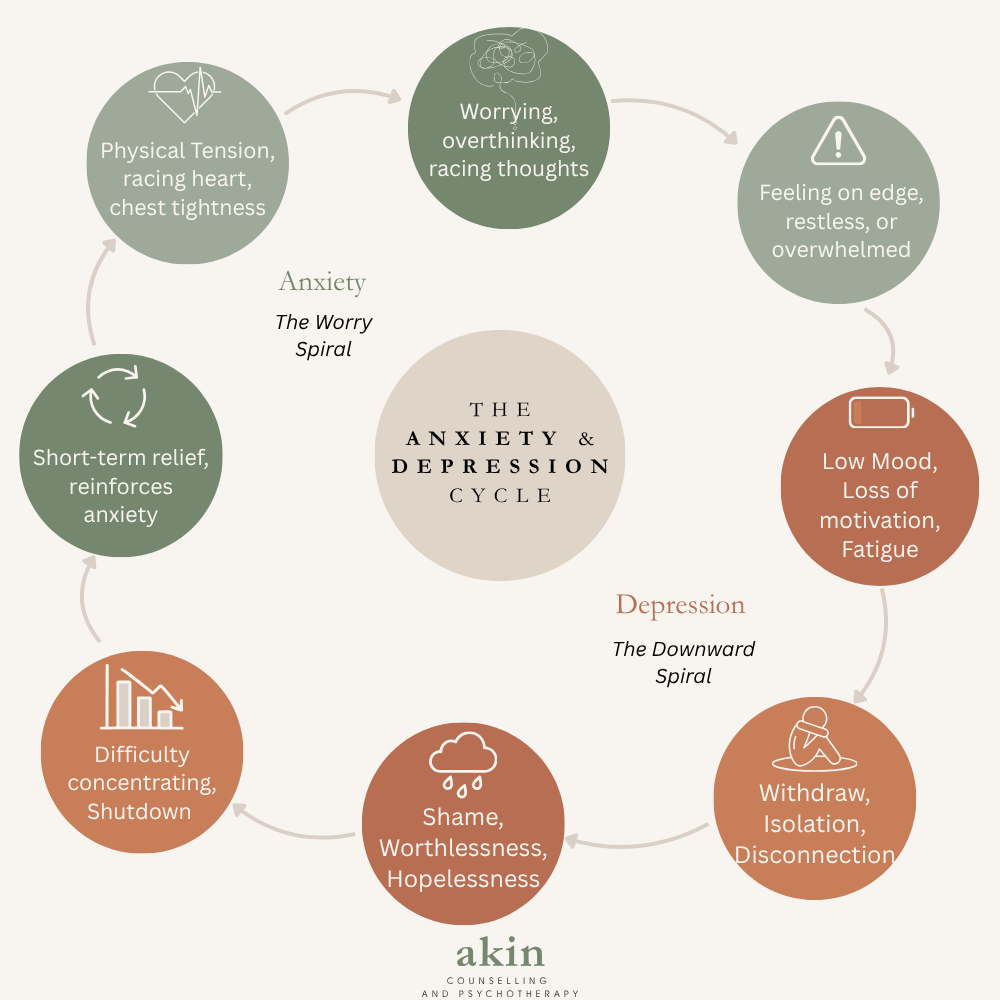
How anxiety and depression symptoms can often co-occur together and even influence each other overtime.
When the constant sense of urgency remains over time our mind and body can become emotionally and physically exhausted bringing on a heaviness, disconnection, and freezing sense to our nervous system. Understanding how these experiences may be connected can help reduce self-criticism and create more support for your nervous system.

Therapy for anxiety and depression can support you in:
Understanding emotional patterns and triggers by learning to help your nervous system differentiate present danger and stress
Feeling less alone in your experiences by reducing self-criticism and shame and normalizing the feelings of anxiety and depression
Develop emotion regulation and distress tolerance skills
Building resilience to uncomfortable emotions and difficult seasons of life
Building coping skills to tolerate feelings of anxiety before triggering freeze or shutdown responses
Akin Approaches to Navigating Anxiety and Depression
Explore how to compassionately care for your nervous system by understanding what it needs during times of distress - whether heightened or frozen.
-
EFT will allow us to hold space to make sense of overwhelming and alien emotions by understanding the process in which they occur. As emotions become less overwhelming and more specific, you will be able to easily identify your needs when they come up.
-
Polyvagal theory is a neurobiological framework which explores how the autonomic nervous system functions during safe and connected experiences versus dangerous ones shifting through a three-part hierarchical system.
Using a polyvagal-informed approach we can explore shifts in your nervous system so you can mindfully become aware of activation, connection, and shutdown.
-
We will make room for difficult, uncomfortable, and sometimes painful thoughts and experiences heightened by anxiety and depression. ACT helps us practice and acknowledge choice and autonomy even when internal experiences make them feel narrow.
-
DBT coping skills will help support distress tolerance and emotion regulation for the moments where thoughts and feelings feel too intense to process. Mindfully noticing what is coming up without responding can offer a way to navigate experiences without exacerbating emotions.
“Sometimes the bravest thing you can do is just show up.”
-Brené Brown
Contact Us
Whether you are experiencing anxiety and depression symptoms together or separately, we can learn to respond with understanding and compassion.